Degree of impact
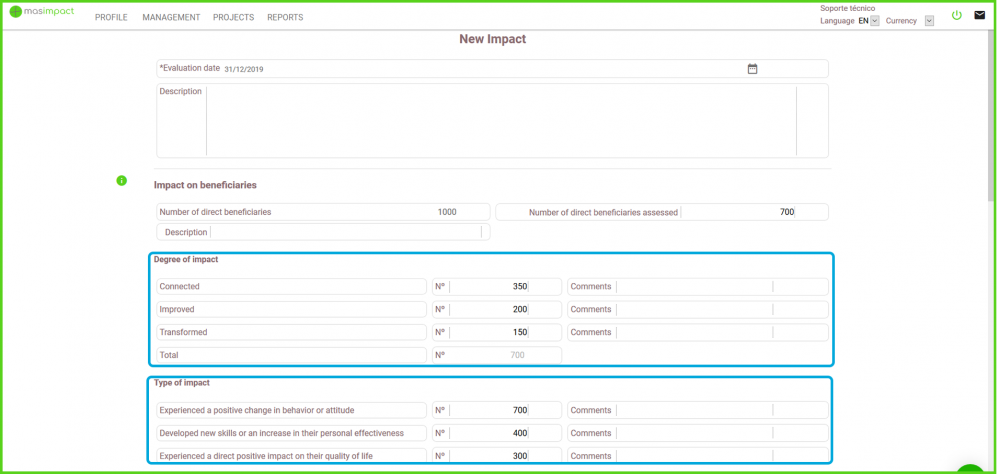
In order to measure the degree or depth of the impact on people, you must first answer the following question:From the total number of beneficiaries, how many have been evaluated?
Of those beneficiaries
who have been evaluated, how many have achieved an improvement, transformation or a level of connection?
The figures computed at each level of depth are mutually exclusive. For example: people who experienced a transformation cannot be counted as sensitised or achieved an improvement. The sum of the three levels (Awareness, Improvement and Transformation) will be equal to or less than the number of beneficiaries assessed. Some of the potential beneficiaries may not even have reached the awareness level.
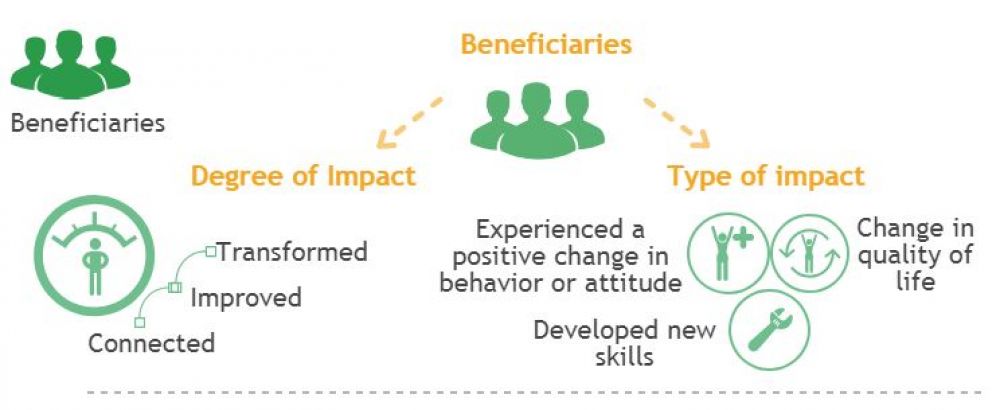
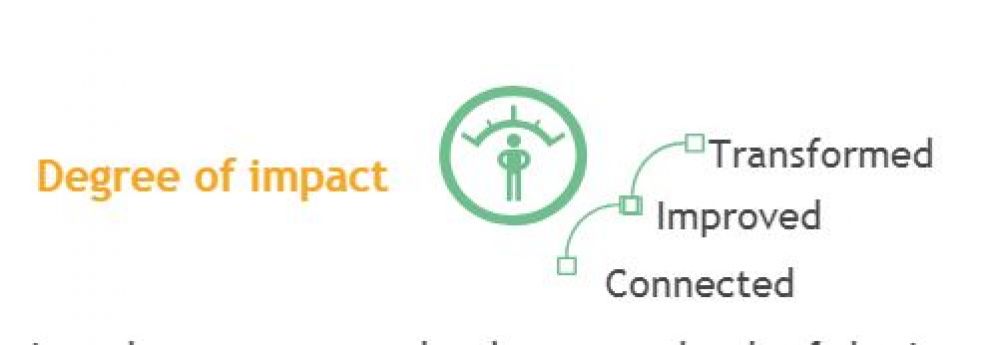
- Connected: Beneficiaries have simply been sensitised to the intervention but have not achieved an improvement. In many cases awareness raising is the objective of the initiative or project.
- Improved: When the initiative or project has led to an improvement in people's habits, skills or knowledge.
- Transformed: There has been a significant and lasting change in people.
Type of impact
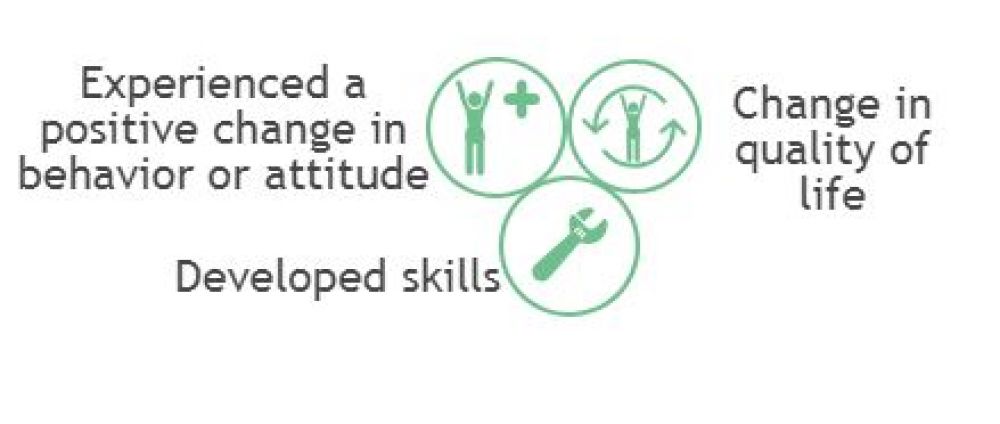
- Experienced a positive change in their behaviour or attitude as a result of the support: It is evaluated if the activity has contributed to generate behavioral changes that improve the lives of people. It also shows if the activity has allowed to change negative attitudes or prejudices allowing people to make better decision.
- Developed new skills or an increase in their personal effectiveness: It is evaluated if the activity has contributed to develop new skills or improve existing ones that allow people to function in an academic / social / physical context.
- Experienced a direct positive impact on their quality of life as a result of your support: It will be evaluated if the activity has contributed to people being healthier or happier because they have improved their emotional or social physical well-being.
It is possible for a person to experience several types of impact, so that the same beneficiary can be included in several categories. In this case, to avoid duplicating the beneficiary count, the totals of the three categories should not be added, but should be reported separately.